
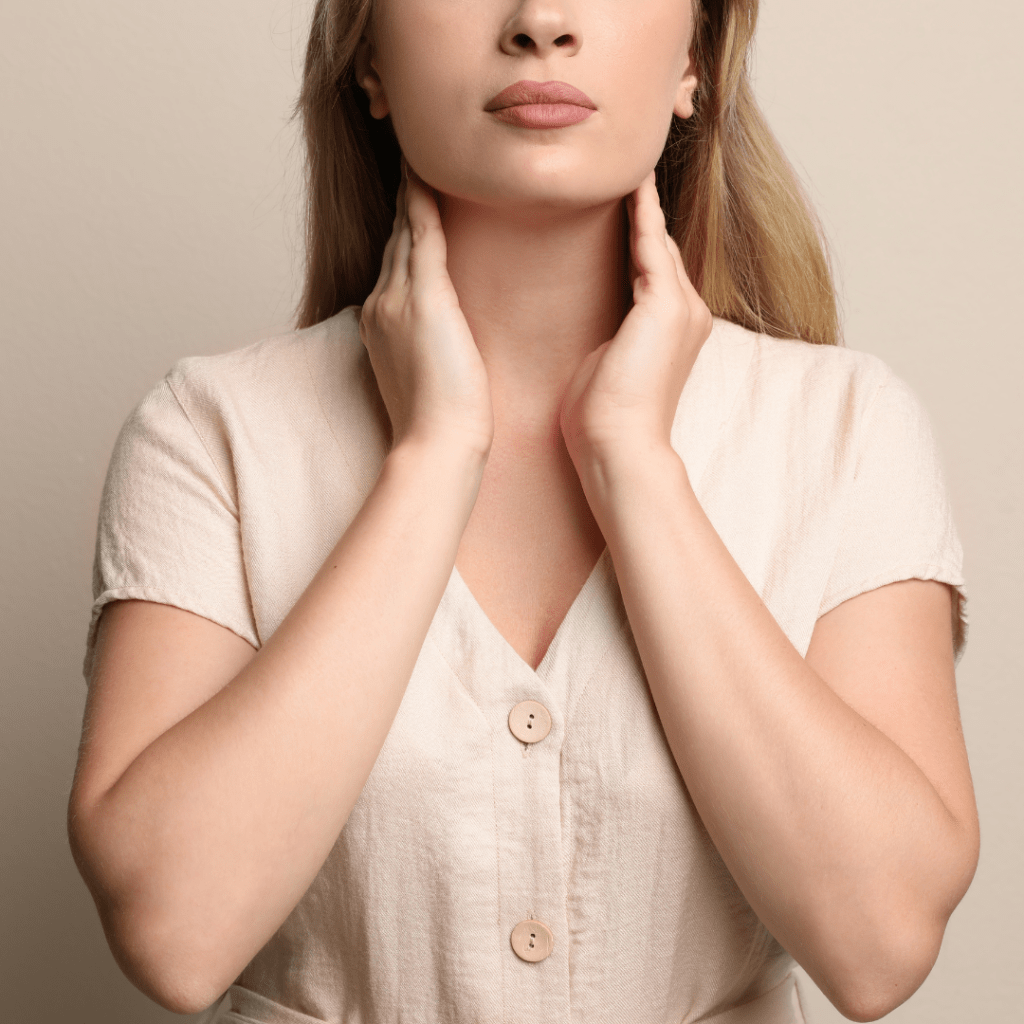
What is the thyroid and what does it do?
Your thyroid is located in the front of your neck, just below your adam’s apple. The thyroid is an endocrine gland – this means it produces hormones. Specifically it is responsible for the formation and secretion of thyroxine (T4). It is also responsible for maintaining the homeostasis of iodine within the human body.
T4 (thyroxine) is inactive when in it made from the thyroid gland. It then needs to be converted tp its active form T3 (triiodothyronine) with the help of nutrients such as iodine, selenium and tyrosine. If these nutrients aren’t available or you are going through a period of chronic stress, the body may convert T4 into a different inactive thyroid hormone rT3 (reverse T3).
The thyroid has one of the most important jobs in your body, the thyroid is responsible for temperature regulation (feeling hot or cold), controlling energy levels, metabolism, blood pressure and heart rate.

Symptoms indicating you might have low thyroid function (hypothyroidism);
- Fatigue
- Depression, anxiety or a general ‘poor response’ to stress
- Trouble sleeping
- Digestive complaints – constipation, diarrhoea etc.
- Weight gain
- Cold hands and feet
- Joint or muscle pain
Symptoms indicating you may have increased thyroid function (hyperthyroidism);
- Anxiety
- Diarrhoea
- Heat intolerance
- Weight loss
- Palpitations
- Goiter (enlarged thyroid gland)
Symptoms of both hyper and hypo- thyroidism include brittle hair or hair loss, weak nails & dry skin. However, because majority of these symptoms are quite generic and may not be related to your thyroid health at all, there are a few other things to consider.
TSH – Thyroid Stimulating Hormone
Lets talk about TSH. TSH is usually what the GP tests when determining whether you have a thyroid condition or not. But, TSH isn’t actually a ‘thyroid’ hormone. TSH is a hormone produced by the pituitary gland that ‘stimulates’ the thyroid to produce more or less hormones, depending on how much thyroid hormone there is available around the body. If there isn’t enough, the thyroid will be stimulated MORE to produce more hormones, and vise versa. Unfortunately, TSH alone isn’t a good marker of thyroid health because it isn’t taking into account your levels of T4, T3 or Reverse T3. These levels may still be inadequate, or extremely high and your TSH may be saying things are all good.
Stress
As i mentioned earlier, if you are under a significant amount of stress, instead of converting T4 into T3 (the active form) it may convert into Reverse T3 instead. This level is important to test as if this is high, it shows your need to support your adrenal glands and work on reducing your stress levels.
Thyroid Antibodies
When testing your thyroid function, its important to test whether you have thyroid antibodies. This indicates that your body’s immune system is attacking the thyroid and causing decreased – or increased thyroid function. More likely ‘Hashimoto’s thyroiditis (autoimmune HYPOthyroidism) accounts for a large percentage of hypothyroid cases. The presence of antibodies is critical information that the GP often doesn’t test or acknowledge.
What to do?
As a Naturopath, there are a number of herbs and supplements we can look at to regulate your immune function and decrease thyroid antibiodies. Treatments such as gut healing and anti-inflammatory protocols are implemented to decrease antibodies and improve thyroid function over time.
This is why if a thyroid condition is suspected, I recommend clients have a full thyroid panel tested. This includes TSH, T4, T3, rT3 and anti-thyroid antibodies. This information will either confirm or deny thyroid dysfunction and/or autoimmunity and will guide your treatment much more effectively.

Are you sick of feeling unwell and think your thyroid may be the cause? Book your appointment NOW or book in for a free discovery call to see what I can offer you
 Connate Naturopathy
Leave a comment